
For a lot of homebuilders, subcontractor performance only gets discussed when something has already gone wrong.
A trade misses a date. A failed inspection pushes the next crew back. A buyer walkthrough turns up avoidable defects. Warranty calls pile up after handover. Then the team starts asking whether that subcontractor is really performing.
That is backward.
Too many builders still choose subs mainly on price, then deal with quality and schedule problems later. But the lowest bid is not always the lowest-cost subcontractor once rework, delays, extra supervision and callbacks are added in. If you want tighter schedules, fewer punch items and less warranty pain, you need a better way to evaluate subcontractor performance before and during the job.
For homebuilder project managers, the practical answer is not a bloated vendor scorecard. It is a simple, repeatable subcontractor evaluation process built around three metrics:
-
First-time quality
-
Schedule reliability
-
Speed of fixing issues
If you track those consistently, you will know which trades are helping you scale and which ones are quietly draining margin.
Read more on evaluating subcontractor performance
![[FREE GUIDE] How to Quickly Improve Your Subcontractors Performance](https://no-cache.hubspot.com/cta/default/3353989/fac47599-fc2e-4c85-89b3-d0fc8a6cb984.png)
1. Measure first-time quality not just final appearance
The first and most important subcontractor performance metric is first-time quality.
In plain terms, that means the work was done right the first time. It passed inspection, met the required standard (residential construction performance guidelines) and did not create rework for your team or the trades coming behind it. The attached draft makes this the first evaluation bucket for a reason. Rework kills schedule and profit.
How much does field rework in construction actually cost?
For homebuilders, first-time quality can be measured in practical ways:
-
Percentage of work passing inspection on the first attempt
-
Number of punch list items tied to that subcontractor
-
Warranty callbacks linked to their work
This matters because a trade can look acceptable at the end of a build and still have caused major waste along the way. If framing had to be adjusted three times to suit follow-on work, or if rough-in issues keep surfacing at drywall stage, that subcontractor is not performing well, even if the final finish eventually looks fine.
A good contractor evaluation process looks beyond whether the home was eventually completed. It asks how much avoidable friction that trade created getting there.
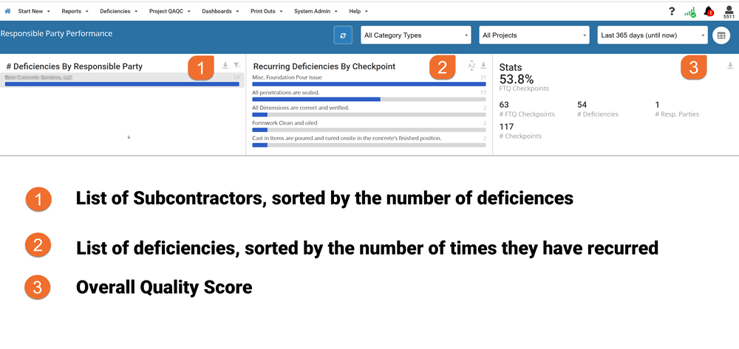
2. Track schedule reliability like it’s a quality issue
Many builders separate schedule and quality. They should not.
A subcontractor that regularly starts late, finishes late, or cannot stay co-ordinated with adjacent trades is creating a quality problem for the whole build process. One late trade can disrupt sequencing, compress later tasks, increase site congestion and force rushed work. The attached draft correctly treats schedule reliability as a core part of subcontractor performance, not a side note.
For homebuilders, schedule reliability should include:
-
On-time start rate
-
On-time completion rate
-
Ability to stay aligned with other trades
-
Responsiveness when schedules change
This is where a lot of subcontractor evaluation falls down. Teams remember the dramatic failures, but they do not consistently log the smaller misses that create drag across multiple homes. A painter who is usually two days late may not trigger a major escalation on one plot, but across a development that pattern compounds fast'
If you want a more useful contractor performance evaluation system, stop asking only, ‘Did they eventually finish?’
Start asking, ‘How reliably can we build around them?
Find out about how to build inspection and test plans for production homebuilders
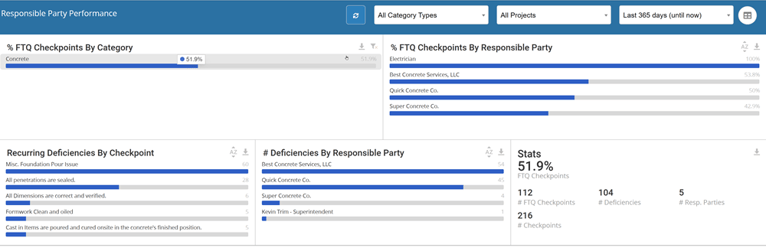
3. Measure how quickly issues get fixed
Some subcontractors do decent work but are terrible at returning to fix problems.
That still hurts performance.
It’s right to isolate fix speed as its own category. Even skilled trades can cause unnecessary delays if they are slow to respond, slow to return, or vague about when work is actually ready for re-inspection.
For homebuilders, this part of subcontractor performance should include:
-
Responsiveness to calls or messages
-
Average days from issue assignment to ‘ready for re-inspection’
-
Reliability of communication during correction work
This is especially important in housing because unresolved items do not just sit in a report. They block completions, slow sign-off, affect buyer experience and can roll straight into warranty work if they are not closed properly.
Fast issue resolution also tells you something deeper about the subcontractor. It shows whether they take accountability seriously or only react when pressure builds.

Build a subcontractor evaluation process that people will actually use
Most contractor evaluation systems fail for one reason. They are too cumbersome.
If your supers or PMs have to maintain separate spreadsheets, chase updates in texts and reconstruct what happened from memory, the scoring system will die. Or worse, it will survive as a box-ticking exercise with no management value.
A workable subcontractor management process should be simple:
-
Before the work starts, set expectations clearly. FTQ360’s own guidance recommends reviewing checkpoint items and quality expectations with subs before each work task so they know exactly what they will be evaluated against.
-
While the work is in progress, inspect against those expectations consistently. Do not rely on informal walkthroughs alone.
-
When work is complete, record the actual result. Not opinions. Not who shouted the loudest. The actual result.
Then review trends by trade over time:
-
Who passes first time most often?
-
Who causes the most punch items?
-
Who is late most often?
-
Who fixes issues quickly?
-
Who improves after feedback?
-
Who keeps repeating the same mistakes?
That is a real subcontractor scorecard.
Why digital tracking matters
Digitization makes subcontractor evaluation easier because it allows you to track quality issues, late starts, late finishes and time-to-fix across all homes and projects over time.
Without that, most homebuilders are managing subcontractor performance with fragmented information spread across spreadsheets, emails, punch lists and individual site knowledge. That makes consistent contractor evaluation almost impossible at scale.
FTQ360 makes the same point. Homebuilder QA software and digital tools help standardize inspections, document deficiencies, create accountability and turn recurring issues into measurable performance trends.
For project managers, the benefit is simple. You stop arguing about anecdotes and start managing with evidence. You can:
-
See which trades are improving.
-
Spot recurring issues earlier.
-
Compare performance across communities.
-
Make better hiring and allocation decisions.
That is the shift from reactive firefighting to actual performance management.
Final thought
If you are still grading subcontractors mainly on price, you are managing risk too late.
The better approach is to measure subcontractor performance in a way that reflects how homebuilding really works namely, focusing on quality, schedule and response speed. That gives you a cleaner view of who helps you build predictable homes and who keeps creating avoidable drag.
And once that evaluation process is digital, consistent and visible across projects, you are no longer guessing.
You are managing subcontractor performance properly.